

- Usage in publication:
-
- Wawarsing wedge
- Modifications:
-
- Named
- Dominant lithology:
-
- Limestone
- Shale
- AAPG geologic province:
-
- Appalachian basin
Bird, P.H., 1941, A geologic discovery: The Delaware Water Supply News, v. 4, no. 62, p. 278.
Summary:
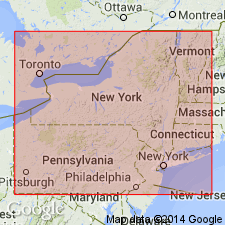
Named Wawarsing wedge for Wawarsing, Ulster Co., NY. Consists of greenish-gray, fine- to medium-grained limestone with shaly layers. Unit is wedge shaped and is 29 meters thick at type section. The Wawarsing overlies the Shawangunk formation and underlies the High Falls shale.
Source: GNU records (USGS DDS-6; Reston GNULEX).
- Usage in publication:
-
- Wawarsing Limestone*
- Modifications:
-
- Overview
- AAPG geologic province:
-
- Appalachian basin
Summary:
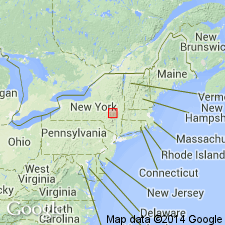
The Wawarsing Limestone is mostly, if not entirely, dolomite with significant shales and is poorly exposed. Unit is very similar to the Poxono Island Formation and may be considered as a member of the Poxono Island; however, the poor exposure of the unit does not warrant detailed study.
Source: GNU records (USGS DDS-6; Reston GNULEX).
For more information, please contact Nancy Stamm, Geologic Names Committee Secretary.
Asterisk (*) indicates published by U.S. Geological Survey authors.
"No current usage" (†) implies that a name has been abandoned or has fallen into disuse. Former usage and, if known, replacement name given in parentheses ( ).
Slash (/) indicates name conflicts with nomenclatural guidelines (CSN, 1933; ACSN, 1961, 1970; NACSN, 1983, 2005, 2021). May be explained within brackets ([ ]).