The National Geologic Map Database is migrating to a new infrastructure. We apologize for any service disruptions during this process.
|
|---|


- Usage in publication:
-
- Panaca formation*
- Modifications:
-
- Named
- Dominant lithology:
-
- Tuff
- AAPG geologic province:
-
- Great Basin province
Summary:
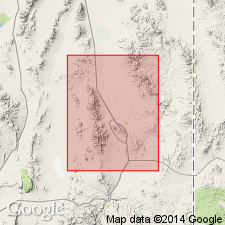
Deposits called "Panaca beds" by Stock (1921, in abstract) for village of Panaca, Lincoln Co, NV. Here unit named Panaca formation for exposures east and west of Panaca in Meadow Valley and Patterson Wash. Best exposures are in south half of Ely Range quad. Consists of series of water-laid tuffs lying in essentially same position as when they were deposited. Beds range from snow-white through cream and brown to terra cotta color. Concretions (dark-gray or brownish-gray flinty bodies) occur in middle and upper parts of Panaca tuffs in buttes in northern part of Panaca village. Tuffs include diatoms [listed in report]. Thickness is at least several 100 ft. About 2 mi north of Panaca, unit lies against 30 deg slope of Cambrian limestone. Age is Pliocene(?) based on mammalian fossils found by Stock (1921).
Source: GNU records (USGS DDS-6; Menlo GNULEX).
- Usage in publication:
-
- Panaca Formation*
- Modifications:
-
- Age modified
- Biostratigraphic dating
- AAPG geologic province:
-
- Great Basin province
Summary:
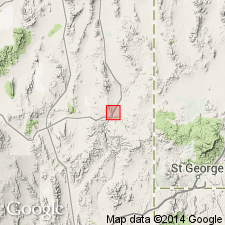
Age is late Miocene and Pliocene based on mammalian vertebrate fossils.
Source: GNU records (USGS DDS-6; Menlo GNULEX).
For more information, please contact Nancy Stamm, Geologic Names Committee Secretary.
Asterisk (*) indicates published by U.S. Geological Survey authors.
"No current usage" (†) implies that a name has been abandoned or has fallen into disuse. Former usage and, if known, replacement name given in parentheses ( ).
Slash (/) indicates name conflicts with nomenclatural guidelines (CSN, 1933; ACSN, 1961, 1970; NACSN, 1983, 2005, 2021). May be explained within brackets ([ ]).