The National Geologic Map Database is migrating to a new infrastructure. We apologize for any service disruptions during this process.
|
|---|


- Usage in publication:
-
- Sentinel Island Formation
- Modifications:
-
- Named
- Biostratigraphic dating
- Dominant lithology:
-
- Conglomerate
- Sandstone
- Siltstone
- AAPG geologic province:
-
- Puget Sound province
Summary:
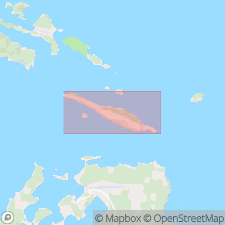
Named as upper formation of Spieden Group for Sentinel Island. Composite type section: along northwest and southwest shorelines of Spieden Island and along western shoreline of Sentinel Island, sec 2, T37N, R4W. Formerly upper part of Spieden Formation. Crops out San Juan Islands only. Chiefly 740 m volcanic conglomerate, sandstone, and siltstone divided into two informal members. Lower member shallow marine; upper alluvial fan. Disconformably overlies Upper Jurassic Spieden Bluff Formation; top not exposed. Age for lower member from Early Cretaceous fauna, Valanginian BUCHIA CRASSICOLLIS SOLIDA and Hauterivian INOCERMAS COLONICUS or OVITOIDE. Inferred unconformity (small) between members; no direct control on upper member, but considered Early Cretaceous.
Source: GNU records (USGS DDS-6; Menlo GNULEX).
- Usage in publication:
-
- Sentinel Island Formation*
- Modifications:
-
- Geochronologic dating
- AAPG geologic province:
-
- Puget Sound province
Summary:
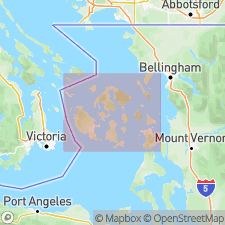
Sample 25 (zircon from clasts in Sentinel Island Formation of Spieden Group) yielded fission-track age of 138 +/-15 Ma. Formation in large part consists of texturally immature volcanic detritus. Isotopic ages (K-Ar on apatite of 145 +/-1.5 Ma of Johnson, 1981) approximate ages of fossils in unit. This age indicates these rocks were never reheated above apatite-annealing isotherm.
Source: GNU records (USGS DDS-6; Menlo GNULEX).
For more information, please contact Nancy Stamm, Geologic Names Committee Secretary.
Asterisk (*) indicates published by U.S. Geological Survey authors.
"No current usage" (†) implies that a name has been abandoned or has fallen into disuse. Former usage and, if known, replacement name given in parentheses ( ).
Slash (/) indicates name conflicts with nomenclatural guidelines (CSN, 1933; ACSN, 1961, 1970; NACSN, 1983, 2005, 2021). May be explained within brackets ([ ]).