The National Geologic Map Database is migrating to a new infrastructure. We apologize for any service disruptions during this process.
|
|---|


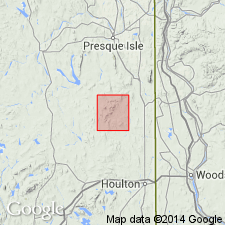
- Usage in publication:
-
- Saddleback Mountain Member*
- Modifications:
-
- Named
- Dominant lithology:
-
- Volcanics
- AAPG geologic province:
-
- New England province
Summary:
Saddleback Mountain, lower member of Hovey Formation (new name) described. Consists mostly of devitrified glass, chiefly keratophyre, but contains minor amounts of other rocks. Thickness 0 to 4,000 ft. Occurs in lower part of formation below Dunn Brook member (new name) and a volcanic breccia unit. Age is Early Silurian(?).
Source: GNU records (USGS DDS-6; Reston GNULEX).
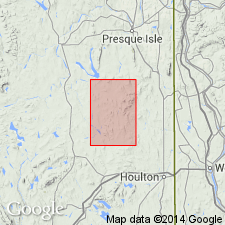
- Usage in publication:
-
- Saddleback Mountain†
- Modifications:
-
- Abandoned
- AAPG geologic province:
-
- New England province
Summary:
Name Saddleback Mountain Member herein abandoned; such volcanic rocks are considered to be unnamed volcanic lenses of uncertain stratigraphic position within Nine Lake Formation (new name) of Hovey Group (rank raised).
Source: GNU records (USGS DDS-6; Reston GNULEX).
For more information, please contact Nancy Stamm, Geologic Names Committee Secretary.
Asterisk (*) indicates published by U.S. Geological Survey authors.
"No current usage" (†) implies that a name has been abandoned or has fallen into disuse. Former usage and, if known, replacement name given in parentheses ( ).
Slash (/) indicates name conflicts with nomenclatural guidelines (CSN, 1933; ACSN, 1961, 1970; NACSN, 1983, 2005, 2021). May be explained within brackets ([ ]).