The National Geologic Map Database is migrating to a new infrastructure. We apologize for any service disruptions during this process.
|
|---|


- Usage in publication:
-
- Markley formation
- Modifications:
-
- Original reference
- Dominant lithology:
-
- Sandstone
- Shale
- AAPG geologic province:
-
- Sacramento basin
Summary:
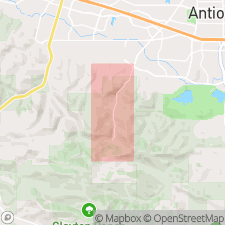
Pg. 54-111. Markley formation. Heterogeneous assemblage of beds, mostly of shallow-water origin but possibly in part continental. Thickness 3,300 feet. Lithology very different from that of San Ramon formation but very probably it is contemporaneous, at least in part, with the San Ramon. The upper 1,300 feet consists of alternating layers of clay shale, sandy shale, and sandstone, and contains a meager fauna. The lower 2,000 feet is predominantly sandstone and contains no fossils. In former paper writer included latter beds in the Tejon, but he now believes them to be lower Oligocene. Disconformably underlies Kirker formation. The Kirker and Markley formations compose San Lorenzo series in this area.
Named from exposures in vicinity of Markley Canyon, Mount Diablo region, [Contra Costa Co., Mount Diablo 15-min quadrangle], San Francisco Bay region, western CA.
Source: US geologic names lexicon (USGS Bull. 896, p. 1302).
- Usage in publication:
-
- Markley formation
- Modifications:
-
- Age modified
- Biostratigraphic dating
- AAPG geologic province:
-
- Sacramento basin
Summary:
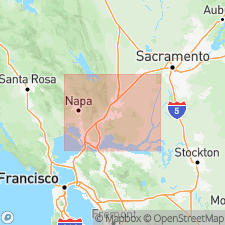
Pg. 326 and 1931 (GSA Bull., v. 42, no. 1, p. 304). Markley formation. Assigned this formation to Eocene.
B.L. Clark, 1931 (GSA Bull., v. 42, no. 1, p. 304). Fossils found in Markley formation by T. Bailey indicate it is probably Eocene and = Tejon formation.
Source: US geologic names lexicon (USGS Bull. 896, p. 1302).
- Usage in publication:
-
- Markley sandstone*
- Modifications:
-
- Age modified
- AAPG geologic province:
-
- Sacramento basin
Summary:
On Dec. 4, 1932, B.L. Clark (unpublished report) assigned Markley sandstone to Oligocene and Eocene.
Source: US geologic names lexicon (USGS Bull. 896, p. 1302).
For more information, please contact Nancy Stamm, Geologic Names Committee Secretary.
Asterisk (*) indicates published by U.S. Geological Survey authors.
"No current usage" (†) implies that a name has been abandoned or has fallen into disuse. Former usage and, if known, replacement name given in parentheses ( ).
Slash (/) indicates name conflicts with nomenclatural guidelines (CSN, 1933; ACSN, 1961, 1970; NACSN, 1983, 2005, 2021). May be explained within brackets ([ ]).