

- Usage in publication:
-
- Ludwig Mine Formation*
- Modifications:
-
- Original reference
- Dominant lithology:
-
- Sandstone
- Gypsum
- Marble
- AAPG geologic province:
-
- Great Basin province
Summary:
Pg. 255 (fig. 3), 259-260, 285 (App. 1). Ludwig Mine Formation. Divided into (ascending): (1) limestone member, calcite marble, commonly brecciated, 35 to 80 m thick; (2) gypsum member, 12 to 135 m thick; and (3) quartzitic sandstone member, about 335 m thick. Total thickness 380 to 515 m. Underlies Artesia Lake Volcanics and overlies Gardnerville Formation. Intruded by McLeod Hill quartz monzonite (169.4 Ma). Age is considered late Early to middle Middle Jurassic (Toarcian to Bajocian) based on Early Jurassic fossils recovered from the underlying Gardnerville and U-Pb zircon age obtained from the McLeod Hill.
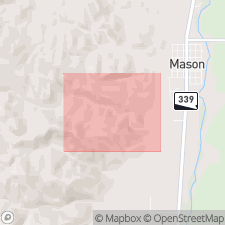
Type locality: exposures in secs. 26, 27, and 34, T. 13 N., R. 24 E., Artesia Lake 7.5-min quadrangle [1986 prov. ed.], Yerington region, Singatse Range, Lyon Co., west-central NV. Named from Ludwig Mine, 500 m northeast of abandoned site of Ludwig, 10 km southwest of Yerington, [Artesia Lake 7.5-min quadrangle (1986 prov. ed.), Lyon Co., west-central NV].
Source: Publication.
For more information, please contact Nancy Stamm, Geologic Names Committee Secretary.
Asterisk (*) indicates published by U.S. Geological Survey authors.
"No current usage" (†) implies that a name has been abandoned or has fallen into disuse. Former usage and, if known, replacement name given in parentheses ( ).
Slash (/) indicates name conflicts with nomenclatural guidelines (CSN, 1933; ACSN, 1961, 1970; NACSN, 1983, 2005, 2021). May be explained within brackets ([ ]).