

- Usage in publication:
-
- [Fulstone Spring Volcanics*]
- Modifications:
-
- Principal reference
- Dominant lithology:
-
- Volcanics
- AAPG geologic province:
-
- Great Basin province
Summary:
Pg. 262 (fig. 4), 263-264, 285 (App. 1). Fulstone Spring Volcanics. [Authors indicate this is a formal proposal, thus to lessen confusion, the name is capitalized here.] Subaerial silicic flows, domes, breccias, and ignimbrites. Divided into 5 subunits; includes Willow Tuff Member (middle) and Churchill Canyon Tuff Member (top). Thickness up to 1,500 m. Overlies Artesia Lake Volcanics and unconformably underlies Cenozoic volcanic rocks. Previously called Fulstone volcanic unit by Salas (1971, Laramie, WY, Amer. Heritage Mus. Anaconda Archives, p. 1-6) and volcanics of Fulstone Spring by Proffett and Dilles (1984, Nevada Bur. Mines Geol. Map, no. 77), Dilles and Wright (1988, GSA Bull., v. 100, no. 5, fig. 1) and Proffett and Dilles (1991, Geol. Soc. Nevada Field Trip Gdbk. Comp., v. 2, p. 1031-1036). Age is considered Middle Jurassic (Bajocian and possibly in part Bathonian) based on U-Pb zircon ages of ca. 166 to 169 Ma.
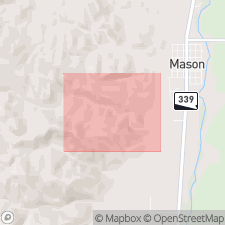
Type section: 1,000 to 3,000 m west of Standard Slag Mine [formerly Minnesota Mine], in secs. 23 and 24, T. 14 N., R. 23 E., Mount Como and Lincoln Flat 7.5-min quadrangles [1993 ed.], near and west of Fulstone Number 3 Spring, Yerington region, northern Buckskin Range, Douglas Co., west-central NV. Named from Fulstone Number 3 Spring, 1.5 km west of Standard Slag Mine, Lincoln Flat 7.5-min quadrangle [1993 ed.], Douglas Co., west-central NV.
Source: Publication.
For more information, please contact Nancy Stamm, Geologic Names Committee Secretary.
Asterisk (*) indicates published by U.S. Geological Survey authors.
"No current usage" (†) implies that a name has been abandoned or has fallen into disuse. Former usage and, if known, replacement name given in parentheses ( ).
Slash (/) indicates name conflicts with nomenclatural guidelines (CSN, 1933; ACSN, 1961, 1970; NACSN, 1983, 2005, 2021). May be explained within brackets ([ ]).