

- Usage in publication:
-
- Fortymile series*
- Modifications:
-
- Named
- Dominant lithology:
-
- Marble
- Quartzite
- Schist
- AAPG geologic province:
-
- Alaska East-Central region
Summary:
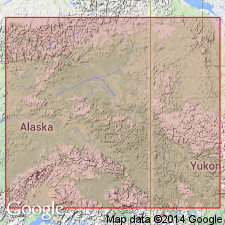
Named for exposures along Forty-mile Creek, tributary to Yukon River, east-central AK. Consists of intercalated marbles and quartzites with hornblendic, micaceous, garnetiferous, and sometimes graphitic schists. Thickness can not be given; however it probably is somewhat less than the 25,000-ft thickness of Birch Creek series (new) which it conformably overlies. Underlies Rampart series (new). [Age not given]
Source: GNU records (USGS DDS-6; Menlo GNULEX).
- Usage in publication:
-
- "Fortymile series"†
- Modifications:
-
- Abandoned
- AAPG geologic province:
-
- Alaska East-Central region
Summary:
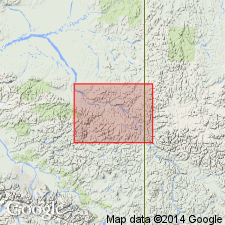
"Fortymile series" of Spurr (1898) abandoned. Its rocks assigned in part to Precambrian Birch Creek schist and in part to the Paleozoic.
Source: GNU records (USGS DDS-6; Menlo GNULEX).
For more information, please contact Nancy Stamm, Geologic Names Committee Secretary.
Asterisk (*) indicates published by U.S. Geological Survey authors.
"No current usage" (†) implies that a name has been abandoned or has fallen into disuse. Former usage and, if known, replacement name given in parentheses ( ).
Slash (/) indicates name conflicts with nomenclatural guidelines (CSN, 1933; ACSN, 1961, 1970; NACSN, 1983, 2005, 2021). May be explained within brackets ([ ]).