The National Geologic Map Database is migrating to a new infrastructure. We apologize for any service disruptions during this process.
|
|---|


- Usage in publication:
-
- Crook Mountain Granite*
- Modifications:
-
- Named
- Dominant lithology:
-
- Granite
- AAPG geologic province:
-
- Midcontinent region
Summary:
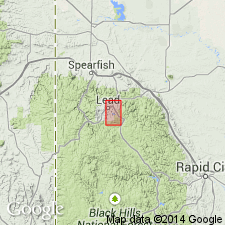
Name applied to a granite penetrated in the subsurface by drilling northeast of the Homestake Mine in Lawrence Co, SD in the Midcontinent region. Named for Crook Mountain, a topographic feature 11 km northeast of the Homestake Mine. Crook Mountain is designated the type area. Has a pegmatitic texture. The CIPW norm is corundum normative; plagioclase composition indicated by the norm is An10. A peraluminous nature, low CaO content, and presence of minor coarse-grained tourmaline combined with a K:Rb ratio of 160 indicates an intermediate di Herentiate from a more primitive granite akin to the Harney Peak Granite of the southern Black Hills. Known only from drillholes; therefore extent and form are poorly understood. Emplaced into previously metamorphosed rocks. The contact metamorphic effects overprinted preexisting regional metamorphic fabric. Early Proterozoic--about 1.72 Ga, the age of Harney Peak Granite --age assigned, although an absolute age cannot be assigned. Probably coeval with the Harney Peak.
Source: GNU records (USGS DDS-6; Denver GNULEX).
For more information, please contact Nancy Stamm, Geologic Names Committee Secretary.
Asterisk (*) indicates published by U.S. Geological Survey authors.
"No current usage" (†) implies that a name has been abandoned or has fallen into disuse. Former usage and, if known, replacement name given in parentheses ( ).
Slash (/) indicates name conflicts with nomenclatural guidelines (CSN, 1933; ACSN, 1961, 1970; NACSN, 1983, 2005, 2021). May be explained within brackets ([ ]).