The National Geologic Map Database is migrating to a new infrastructure. We apologize for any service disruptions during this process.
|
|---|


- Usage in publication:
-
- Coad Mountain Augen Gneiss
- Modifications:
-
- First used
- Dominant lithology:
-
- Gneiss
- AAPG geologic province:
-
- Northern Rocky Mountain region
Summary:
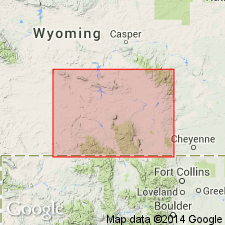
First published use of name. Intent to name and type locality not stated. Crops out in a large body on south end of Coad Mountain, Ts18 and 19N, R82W, and in a small body on the south end of Elk Mountain, northwest Medicine Bow Mountains, T19N, R82W, Carbon Co, WY, Northern Rocky Mountain region. Geologic map. Consists of coarse-grained augen biotite gneiss with large porphyroblasts of microcline that have an average diameter of one-half inch and several inches in diameter. Is in contact with a biotite gneiss on north side of Coad Mountain. Some contacts are gradational; biotite gneiss grades into augen gneiss by increase in percentage of potash feldspar which occurs as augen in biotite gneiss. Other contacts are cross-cutting. Augen gneiss stringers, pods, and lenses extend into the biotite gneiss. Assigned an older Precambrian age.
Source: GNU records (USGS DDS-6; Denver GNULEX).
For more information, please contact Nancy Stamm, Geologic Names Committee Secretary.
Asterisk (*) indicates published by U.S. Geological Survey authors.
"No current usage" (†) implies that a name has been abandoned or has fallen into disuse. Former usage and, if known, replacement name given in parentheses ( ).
Slash (/) indicates name conflicts with nomenclatural guidelines (CSN, 1933; ACSN, 1961, 1970; NACSN, 1983, 2005, 2021). May be explained within brackets ([ ]).