The National Geologic Map Database is migrating to a new infrastructure. We apologize for any service disruptions during this process.
|
|---|


- Usage in publication:
-
- Bryce Canyon formation
- Modifications:
-
- Mapped
- Dominant lithology:
-
- Limestone
- Shale
- Sandstone
- Conglomerate
- AAPG geologic province:
-
- Paradox basin
Summary:
Geol. map. Bryce Canyon Formation. Consists of: upper member, orangish pink limestone grading downward to varicolored shale and sandstone, possibly equivalent to [lower part of] Wasatch Formation of Bowers (1968); and lower member, conglomerate mostly of quartzite cobbles. [Thickness not stated.] Conformably underlies Brian Head Formation. Separated by unconformity from older Kaiparowits Formation. Age is Late Cretaceous to early Tertiary (Montanan? to Paleocene?).
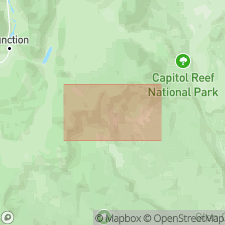
[Origin of name not stated. Mapped along eastern flank of Escalante Mountains in Spencer and Water Canyons, south of Griffin Point, Griffin Point 7.5-min quadrangle, T. 34 S., R. 1 W., Garfield Co., central southern UT.]
Source: Publication.
For more information, please contact Nancy Stamm, Geologic Names Committee Secretary.
Asterisk (*) indicates published by U.S. Geological Survey authors.
"No current usage" (†) implies that a name has been abandoned or has fallen into disuse. Former usage and, if known, replacement name given in parentheses ( ).
Slash (/) indicates name conflicts with nomenclatural guidelines (CSN, 1933; ACSN, 1961, 1970; NACSN, 1983, 2005, 2021). May be explained within brackets ([ ]).